

You’ve been on an airplane many times before, and now that you have a baby, a lot of things have changed. Flying with a baby can make you feel a lot of things. Suddenly, you have a lot of questions when riding a plane. The first one is: Should you bring an infant car seat airplace travel?
To be honest, there is no entirely yes-or-no policy about this. However, safety experts say that you could bring an infant car seat just to be sure. But not all car seats are allowed to be used on airplanes, and airlines also have different policies.
If you want your travel to be so smooth and perfect, you might want to pair the infant car seat with a stroller with accessories, like storage hooks, organizers, or a travel bag. This stroller can make your travel less stressful. Additionally, many parents also find that gate-checking the stroller while they carry the car seat on board gives them the best balance of safety and convenience.
This guide covers everything you need to know about infant car seat airplane travel, including how you can properly install a rear-facing seat, tips on how you can choose the best seats on the plane, and the benefits of traveling with a lightweight and narrow car seat model.
Why Using an Infant Car Seat on a Plane is the Safest Option
Airplane seatbelts are not designed for tiny bodies. The general recommendation for children under 40lbs is to fly in an FAA-approved restraint, either a travel car seat or a CARES harness.
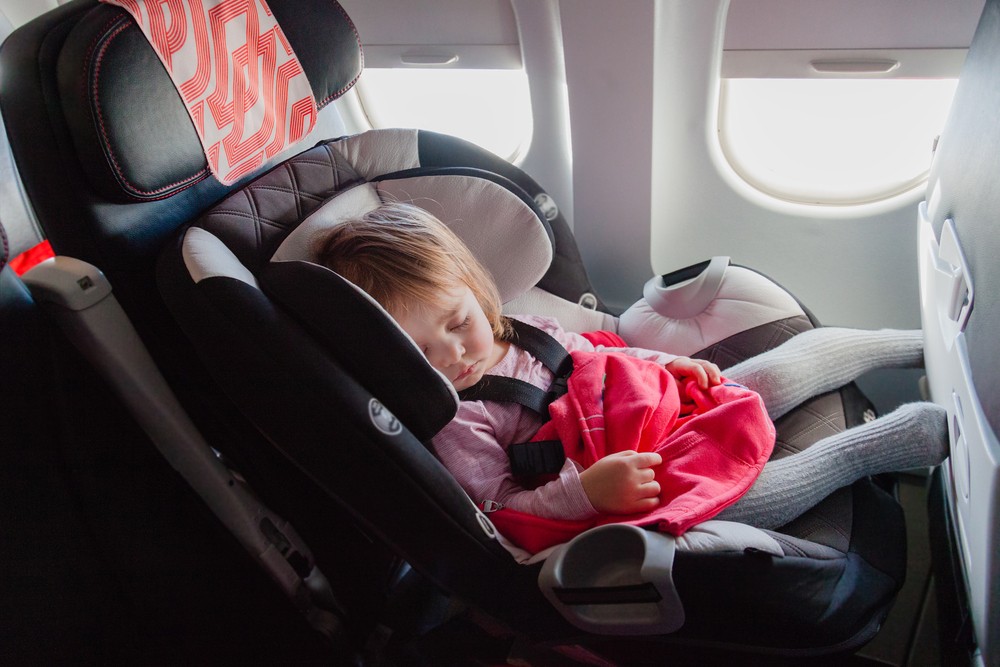
Infant car seats for air travel make sure that your baby is safe while flying. Unlike the lap-held seating, a car seat for air travel keeps your baby in a secure position whenever turbulence or unexpected movement happens. That is why safety experts really recommend to use one whenever you fly with your little one.
The infant car seat also protects the head, neck, and spine of your baby. And since their body are still developing, a rear-facing car seat installed properly will help absorb the impact forces and will keep them safe throughout the flight. Sad to say, but this level of support cannot be matched by holding your baby in your arms.
The Critical Check: Confirming Your Car Seat is FAA-Approved
Before you plan your travel with your little one, check first if the car seat you bought is FAA-approved. This is very important because not all car seats are allowed for air travel use. If you used an unapproved car seat, you may not be able to install it on board.
Verify approval by checking the label found on the side or bottom of the car seat. You will know if the car seat is FAA-approved if you see “This restraint is certified for use in motor vehicles and aircraft.” If you read something like this, it means that it meets the safety standards required for both driving and flying.
The other things that also matter in confirming FAA approval are the size and fit. Certified infant car seats must fit within the airplane seat, usually between the armrests. If you want to install a car seat so easily, go for slim, rear-facing car seat, because these are the ones best suited for infant car seat airplane travel.
If you’re not sure about your seat, check the manufacturer’s website or user manual for aircraft compatibility details. There are also airlines that gives a list of recommended car seat models on their sites.
Essential Guidelines for Purchasing Your Infant’s Airline Ticket and Seat
When you plan your travel with your baby, it is important that you purchase the right airline ticket and seat for them. Although many airlines allow babies to fly as lap children, it is highly suggested you buy a separate seat for them, especially if you plan to use an infant car seat on board.
To use a car seat on the plane, your baby should have their own ticket. With this, you are positive that there is a designated place where you can install the car seat for your baby to be safe throughout the night. When booking, look for standard economy seats because if you choose premium or bulkhead seats, they might have restrictions on car seat use.
Where your baby will sit is another important factor you need to consider. Your best option is the window seats because they will keep the car out of the aisle, not bothering the other passengers. Car seats are not allowed in the exit rows, so it’s best to avoid these seats.
You can also inform the airline beforehand that you’ll be travelling with an infant car seat. It may not be required, but it will help the airline prevent any boarding delays and make sure the cabin crews are prepared to assist you if needed.
How to Properly Install a Rear-Facing Infant Seat on the Aircraft Seat
To install a rear-facing infant seat on the aircraft seat, follow these steps.
- Place the rear-facing infant car seat in the window seat.
- Make sure that the car seat is positioned flat on the aircraft seat and aligned straight, not angled or tilted to one side.
- Route the airplane seat belt through the car seat’s designated belt path.
- Buckle the seat belt and pull it tight. Apply firm pressure to the car seat to eliminate slack. And it should not move more than one inch side to side or front to back.
- If you secured it already, check that the recline angle is appropriate for your baby’s age.
- Lastly, place your baby in the car seat and fasten the internal harness snugly at or below the shoulder level of your baby.
Top tethers and lower anchors are not used during infant car seat airplane travel. The aircraft seat belt is enough, only when it is installed in the right way.
Navigating Airport Logistics: Gate-Checking vs. Bringing the Car Seat Onboard
You may be curious whether to gate-check the car seat or bring it on board during infant car seat airplane travel. Well, both options have their own advantages. So the right choice for you will depend on your travel setup and budget.
- Gate-checking the car seat
This option is more convenient for you if you choose to fly with a lap infant or if you just don’t want to carry the seat through the cabin. This is safer than checking at the ticket counter, but there is still a risk of rough handling or unseen damage.
If you go for this, pair it with a stroller with accessories for easier airport navigation. Attach the car seat to the stroller, so you’ll have a smooth and less stressful travel through the terminals.
- Bringing the car seat on board
The safest option is bringing the car seat on board. An FAA-approved car seat will keep your baby in a secure position throughout the flight. It will also eliminate the risk of damage that can occur when seats are checked. Moreover, the car seat gives you consistent protection from the car to the plane destination.
Choosing the Best Seats on the Plane for a Secure Car Seat Installation
Remember these tips when choosing the best seats on the plane for the infant car seat airplane travel.
- Go for the window seat: This keeps the car seat out of the aisle
- Avoid exit row seats: If you’re not aware, car seats are not allowed in exit rows
- Check bulkhead seat restrictions: There are airlines that don’t allow car seats in bulkhead rows.
- When possible, take the standard economy seats: The fixed armrests will help the car seat stay in position.
- Book adjacent seats if you’re traveling with your partner: With this, you’ll have easier access to your baby.
- Confirm seat compatibility in advance: This ensures that the car seat fits between the armrests.
The Benefits of Traveling with a Lightweight and Narrow Car Seat Model
A lightweight and narrow car seat makes it easier to travel with your baby. This type of compact model is made simply for carrying, and it is also easy to install.
- Easier to carry through airports
- Simpler airplane seat installation
- Better compatibility with airline seats
- More convenient during boarding and deplaning
- Ideal for travel systems
- Comfortable and familiar for your baby
Alternative Restraints: Understanding the CARES Harness and When to Use It
If you’re looking for extra options during your flight, you can consider the CARES harness as an alternative to a traditional car seat. This harness is specifically made for airplane use. Not like the car seat, it is more lightweight, portable, and can be easily folded into a carry-on bag.
The harness can be attached directly to the airplane seat. While it doesn’t offer the same full-body protection as the rear-facing car seat does, it will still be safe for your baby. Most parents choose this harness for their toddlers who have outgrown their rear-facing car seats but are not yet ready for booster seats. The CARES harness also pairs well with travel-friendly accessories, like a stroller with accessories.


